Tuesday, January 17, 2012
perspective
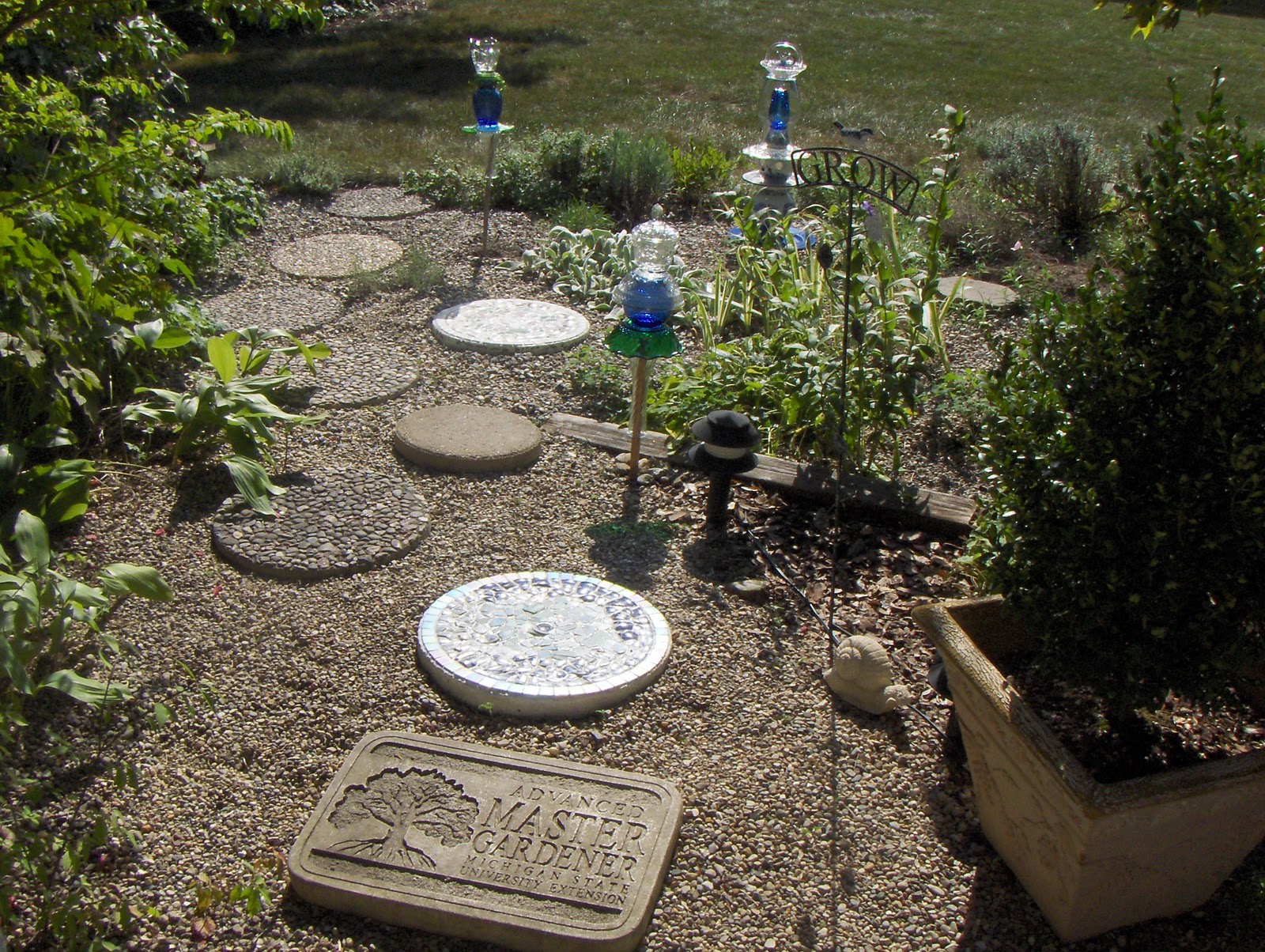
My garden may seem like a never ending maintenance job sometimes, but through the lens of a camera, or from the distance of the winter season, I do nothing but love it, admire it, miss it. A small discussion of one of my photos which I shared with a friend led me to look anew at my own personal sanctuary. Tina Sams, editor of The Essential Herbal magazine, posted a series of mini garden tours of subscribers gardens, and you can view mine at this link


Monday, December 12, 2011
and a year later...
I came back to look at this, my old blog, today, after helping a gal with starting her own. Gosh, it's been a long time, and so much has happened between times.
HOWEVER!
Ahem.
I must say this old blog is looking abandoned.
How sad. I really use to enjoy thinking about what to post.
Now Face Book hogs all the 'puter time and the blog has gone to, what, poetry! salient quotes! I'm ashamed.
Must try harder.
Well, I have collected a boatload of new quotes, so here's one to restart the posting.
“Tell me, what is it you plan to do with your one
wild and precious life?” - Mary Oliver
HOWEVER!
Ahem.
I must say this old blog is looking abandoned.
How sad. I really use to enjoy thinking about what to post.
Now Face Book hogs all the 'puter time and the blog has gone to, what, poetry! salient quotes! I'm ashamed.
Must try harder.
Well, I have collected a boatload of new quotes, so here's one to restart the posting.
“Tell me, what is it you plan to do with your one
wild and precious life?” - Mary Oliver
Wednesday, March 23, 2011
After a snowstorm
(I traded the book away on paperback swap)
"I am so glad I don't have to go out. A whole day before me in which to think and be." ... "It is rather like living in a vast cosmic mood-swing here now."
-(the morning after a snowstorm) May Sarton, Journal of a Solitude
"I am so glad I don't have to go out. A whole day before me in which to think and be." ... "It is rather like living in a vast cosmic mood-swing here now."
-(the morning after a snowstorm) May Sarton, Journal of a Solitude
Thursday, January 06, 2011
Saturday, January 01, 2011
quote
'Yet in a little close, however keen
The winter comes, I find a patch of green,
Where robins, by the miser winter made
Domestic, flit and perch upon the spade"
- John Clare
Friday, December 31, 2010
quote
"The poetry of the earth is ceasing never;
On a lone winter evening when the frost
Has wrought a silence, from the stove there shrills
The Cricket's song, in warmth increasing ever."
- John Keats
On a lone winter evening when the frost
Has wrought a silence, from the stove there shrills
The Cricket's song, in warmth increasing ever."
- John Keats
Wednesday, December 01, 2010
quote
"Withering and keen the winter comes,
While Comfort flies to close-shut rooms,
And sees the snow in feathers pass
Winnowing by the window glass."
- John Clare
While Comfort flies to close-shut rooms,
And sees the snow in feathers pass
Winnowing by the window glass."
- John Clare
Sunday, November 28, 2010
quote
"The warm sun is failing, the bleak wind is wailing,
The bare boughs are sighing, the pale flowers are dying, and the year
On the earth her death bed, in a shroud of leaves dead, is lying."
- Percy Bysshe Shelley
Sunday, November 21, 2010
quote
"Come months, come away,
From November to May,
In your saddest array;
Follow the bier
Of the dead cold year."
- Percy Bysshe Shelley
Saturday, November 20, 2010
quote
"oh wild West Wind, thou breath of autumn's being,
Thou, from whose unseen presence the leaves dead
Are driven like ghosts from an enchanter fleeing,
Yellow and black, and pale, and hectic red"
- Percy Bysshe shelley
Thursday, November 11, 2010
quote
"In winter when the dismal rain
Came down in slanting lines,
And Wind, that great old harper, smote
His thunder-harp of pines."
- Alexander Smith
Came down in slanting lines,
And Wind, that great old harper, smote
His thunder-harp of pines."
- Alexander Smith
Wednesday, November 10, 2010
quote
"The leaves which in the autumn of the year
Fall auburn-tinted, leaving reft and bare
Their parent trees, in many a sheltered lair
Where winter waits and watches,
cold, austere."
- Old Year Leaves by Mackenzie Bell
Fall auburn-tinted, leaving reft and bare
Their parent trees, in many a sheltered lair
Where winter waits and watches,
cold, austere."
- Old Year Leaves by Mackenzie Bell
Saturday, November 06, 2010
quote
"Nature now spreads around, in dreary hue,
A pall to cover all that summer knew;
Yet in the poet's solitary way,
Some pleasing objects for his praise delay"
- John clare
Tuesday, October 26, 2010
quote
Calm and deep peace in this wide air,
These leaves that redden to the fall,
And in my heart, if calm at all,
If any calm, a calm despair."
Alfred Lord Tennyson
Friday, October 22, 2010
sonnet time
"That time of year thou mayest in me behold,
When yellow leaves, or none, or few do hang,
Upon those boughs which shake against the cold,
Bare ruin'd choirs, where late the sweet birds sang.
In me thou seest the twilight of such day."
- William Shakespeare
Saturday, October 16, 2010
quote
"Thus harvest ends its busy reign,
And leaves the fields their peace again,
Where Autumn's shadows idly muse
And tinge the trees in many hues."
- John clare
More yard art - glass totems, cont'd
Back in August I posted some photos of the glass yard art I was making. Here are a few more photos:
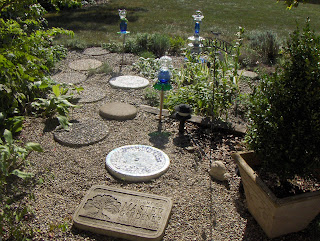
(Reminder - click on the picture to see it better.)
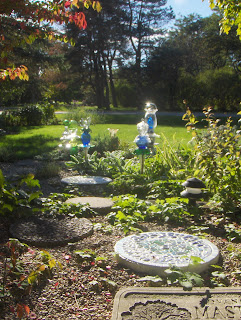
Below is a photo of most of them, catching the autumn rays in my front room when I first brought them in for the winter. It is important to remember to bring these glass things indoors, along with china tea cups, clay flower pots, and the like - to keep the frost from cracking them. I have put the blue glass owl totem on the coffee table now, but will probably have to store it in a safer place for the winter.
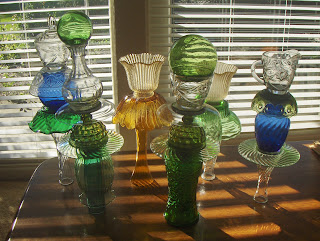
(Reminder - click on the picture to see it better.)

Below is a photo of most of them, catching the autumn rays in my front room when I first brought them in for the winter. It is important to remember to bring these glass things indoors, along with china tea cups, clay flower pots, and the like - to keep the frost from cracking them. I have put the blue glass owl totem on the coffee table now, but will probably have to store it in a safer place for the winter.

Wednesday, October 06, 2010
quote
"Now Autumn's fire burns slowly along the woods,
And day by day the dead leaves fall and melt"
- William Allingham
Friday, October 01, 2010
poem
ASPARAGUS
If melancholy had a home, it would be
A garden in October when frost has picked
The last tomatoes and pinched the peppers free.
I wandered such a place one day; I kicked
Through rotting tangled vines of cucumber
And broken pods of okra, broccoli plants
With stems like trees, and quiet as in slumber,
Two grapes winding up a fence. My glance,
However, fixed at lst on a bed filled
With tall asparagus wholly gone to seed:
Like Christmas trees they stood, their bulbs spilled
Beneath to settle in the earth, freed
For next year's growth. It was a fine bed
(I guessed it at five seasons) showing good care,
And more, restraint. Asparagus is better bred
With patience; the grower's cutting hand must spare
Emough green shoots to drive the crop to come.
He knows each year brings more if he holds
His urge to gather early, leaving some
To infuse the soil with life, for life folds
Into life. I have seen men swallow dreams
From tasting too much extravagance, consuming thus
Too much too soon, and failing, so it seems,
To savor the wisdom in asparagus.
- Bruce Jacobs
Thursday, September 30, 2010
What I did on my summer vacation
Does the time get away from you like it does for me? People say "what have you been up to?" and I never know what to answer - just puttering around, in my own little universe, would be the proper answer I suppose. I guess I could say I became fascinated by tincturing bitters last year after a herb walk led by Jim McDonald last fall at the Ecology Center in Oxford. Then I could tell about how I made a large herbal wall hanging after Robin Mickiewicz demonstrated the craft at Crossroads Village this summer. I made a nice wreath from Silver King Artemisia and Costmary blossoms which was sold at the GCHS tea. And how I began collecting and gluing together junque glass into garden totems after seeing some at a craft show. I need to post a few more photos of them.
But as to what I've been up to? I dunno ... puttering around, as usual. How about You?
I'm posting the following overly long list of my 2010 herbal adventures which I began keeping track of as of June 22, although some of it was remembered and added from earlier this year (and which I may add to as the year goes on, just to keep it all in one place):
Over the summer I made 2 versions herbal tea, which I like to drink sweetened with a little of my home grown stevia or some local honey from the farmers' market:
1. "summer" blossoms:
red clover, german chamomile, primrose, thyme, oregano, savory, ironweed, Baikal scullcap
2. Lemon herbs and flowers for digestive, sedative, headache relief, tonic and nervine
rose petals, lemon verbena, lemon balm, lemon basil, lemon thyme, calendula, rosemary, mint
I made a bug repellent tincture which I'll dilute with witch hazel:
Catnip (fresh) flowers and leaves, pennyroyal (fresh) tops, a few (fresh) tansy leaves, and dry yarrow leaves.
This, after reading the label of a verry expensive ($9.00 for 2 ounces) "natural" insect repellent that Herb bought for golfing. Its list of ingredients: lemongrass, patchouli, peppermint, catnip, and Neem, in witch hazel.
I've been harvesting like crazy:
dandelion roots and crowns (screen dry and zipbagged)
kale leaves (dehydrated and zipbagged)
hawthorn leaves (May) and fruit (Sept-Oct) (screen dry, zipbagged leaves)
mugwort leaves (screen dry) (made sleep pillow with hops) (may still make tincture, oil, moxa floss)
hops "cones" (screen dry) (see mugwort)
monarda flowers and top leaves (hang dry and zipbagged)
Greek oregano leaves (hang dry, screened and bottled)
sage leaves (hang dry and bottled)
thyme leaves (screen dry and bottled)
bay leaves (screen dry)
lavender stems with blossoms (hang dry, zipbagged and bundled)
blue vervain "Simpler's Joy" tops (hang dry and zipbagged)
oenothera (evening primrose) (hang drying whole plant)
lythrum (loosestrife) tops (hang dry)
calendula tops and petals (screen dry)
veronica tops (hang dry)
motherwort leaves (screen dry)
heal-all leaves and flowers (screen dry)
borage leaves and flowers (screen dry, bottled)
southernwood branches, Silver King artemisia tops (hang dry)
red clover flowers (screen dry)
goldenrod tops (hang dry)
purple aster tops (screen dry)
sweet annie (Artemisia annua) branches, hang dry
sassafras leaves (from Ludington), hang dry, zipbagged
castor beans
pineapple sage leaves
mullein root and leaves from first year plant dug in October, hang dry
violet jelly (picked flowers with Aubrey) (gave some to Theresa, Ashley on Mother's Day, and Lois M. )
rose petal jelly (Tuscany and Mme Isaac Periere? check FB) (gave some to Tree and Ash on Father's Day) (gave some to Norma, Ulrike, and Lois)
rose petal honey (some for me, and tiny jars with Kayla and Aubrey) Red/Pinks Tuscany, Mundi, and Mme. I.P.
rose petal elixir ( a.k.a.preFB "rose petal cordial") Red/Pinks
rose petal infused oil - Red/Pinks - Mundi and Mme IP
rose petal vinegar - Reds/Pinks - in homemade organic cider vinegar
rose petal beads - You can use pale pink and white blossoms - it will turn black anyways! (still in progress)
rose petals (screen dry and bottled) for tea and other uses
(March) honey sweetened rose hip tincture with ginger honey from '09 dried rose hips, and (September '10) rose hip tincture from R. eglantina
and tinctured purchased dried elderberries with honey to make cough syrup
elderflowers (4 from my 3 2 yr old plants), fresh, tinctured
StJW tops, fresh, tinctured (began collecting on summer Solstice)
St. J's Wort tops, fresh, oil
holy basil tops, fresh, tinctured
Solomon's seal root, fresh, tinctured
purple aster tops, fresh, tinctured
juniper berries (from beach lot), fresh, tinctured in gin (what the heck?)
quince fruit, fresh. tinctured (for "ratatifa"?)
meadowsweet - dried 2 flower heads in full color (they dry out in the yard as the beetles attack them and they go to seed) as an experiment. Next year I will fresh tincture some.
peonies and sea oats -dried for arrangements
FRESH USE:
mixed flower bouquets, of course!
dandelion greens - cooked
rhubarb
asparagus
strawberries and alpine strawberries
chives
mixed lettuce salads spring and fall
basil leaves fresh as sandwich greens, cooked in pasta sauce, in tomato salad, in bruschetta, in pesto, froze pesto cubes (trying to be more conservative this year, I planted Genovese, regular sweet, lemon, holy, and 'Siam Queen' Thai)
parsley, part of my pesto recipe
dillweed in dill sauce on fish
lemon balm, purple aster herbal teas
garlic scapes - green dip
rosemary, oregano, marjoram, used cooked in pasta sauce, chili, oven roasted veggies, and so on
tomatoes, peppers (Herb made lots of fresh salsa),the freezer is full
garlic and shallots: dug on July 26 (big this year), replanted 30 cloves on September 30
Jerusalem artichokes to roast with a roast beef
I have Plans for:
comfrey - oil? dry some
marshmallow root and maybe the leaves
always more thyme!
anise hyssop - just planted a new one after having been without for a few years
feverfew? angelica? (there weren't as many seedlings this year as usual)
southernwood, absinthe (wormwood)
ginkgo leaves
Solomon's seal root, and false solomon's seal
rose hips
European betony (Stachys betonica or Stachys officinalis)
Baikal skullcap (the Chinese plant, not the native that all the herbalists are talking about)
and, when the plants are ready:
gogi berries (or wolfberry) from the plant I started from seed last year
elderberries from the plants I started last year
New Jersey tea from the seedling I transplanted this year.
What I missed so far and will try to use/make next year:
hawthorn flowers, lily of the valley flowers, lilac flowers, dianthus and apple blossoms, meadowsweet blossoms, and chamomile (pick with Aubrey to make Peter Rabbit Tea)
Rosa englatina leaf for tinctures
chervil, sweet cicely, valerian blossoms
But as to what I've been up to? I dunno ... puttering around, as usual. How about You?
I'm posting the following overly long list of my 2010 herbal adventures which I began keeping track of as of June 22, although some of it was remembered and added from earlier this year (and which I may add to as the year goes on, just to keep it all in one place):
Over the summer I made 2 versions herbal tea, which I like to drink sweetened with a little of my home grown stevia or some local honey from the farmers' market:
1. "summer" blossoms:
red clover, german chamomile, primrose, thyme, oregano, savory, ironweed, Baikal scullcap
2. Lemon herbs and flowers for digestive, sedative, headache relief, tonic and nervine
rose petals, lemon verbena, lemon balm, lemon basil, lemon thyme, calendula, rosemary, mint
I made a bug repellent tincture which I'll dilute with witch hazel:
Catnip (fresh) flowers and leaves, pennyroyal (fresh) tops, a few (fresh) tansy leaves, and dry yarrow leaves.
This, after reading the label of a verry expensive ($9.00 for 2 ounces) "natural" insect repellent that Herb bought for golfing. Its list of ingredients: lemongrass, patchouli, peppermint, catnip, and Neem, in witch hazel.
I've been harvesting like crazy:
dandelion roots and crowns (screen dry and zipbagged)
kale leaves (dehydrated and zipbagged)
hawthorn leaves (May) and fruit (Sept-Oct) (screen dry, zipbagged leaves)
mugwort leaves (screen dry) (made sleep pillow with hops) (may still make tincture, oil, moxa floss)
hops "cones" (screen dry) (see mugwort)
monarda flowers and top leaves (hang dry and zipbagged)
Greek oregano leaves (hang dry, screened and bottled)
sage leaves (hang dry and bottled)
thyme leaves (screen dry and bottled)
bay leaves (screen dry)
lavender stems with blossoms (hang dry, zipbagged and bundled)
blue vervain "Simpler's Joy" tops (hang dry and zipbagged)
oenothera (evening primrose) (hang drying whole plant)
lythrum (loosestrife) tops (hang dry)
calendula tops and petals (screen dry)
veronica tops (hang dry)
motherwort leaves (screen dry)
heal-all leaves and flowers (screen dry)
borage leaves and flowers (screen dry, bottled)
southernwood branches, Silver King artemisia tops (hang dry)
red clover flowers (screen dry)
goldenrod tops (hang dry)
purple aster tops (screen dry)
sweet annie (Artemisia annua) branches, hang dry
sassafras leaves (from Ludington), hang dry, zipbagged
castor beans
pineapple sage leaves
mullein root and leaves from first year plant dug in October, hang dry
violet jelly (picked flowers with Aubrey) (gave some to Theresa, Ashley on Mother's Day, and Lois M. )
rose petal jelly (Tuscany and Mme Isaac Periere? check FB) (gave some to Tree and Ash on Father's Day) (gave some to Norma, Ulrike, and Lois)
rose petal honey (some for me, and tiny jars with Kayla and Aubrey) Red/Pinks Tuscany, Mundi, and Mme. I.P.
rose petal elixir ( a.k.a.preFB "rose petal cordial") Red/Pinks
rose petal infused oil - Red/Pinks - Mundi and Mme IP
rose petal vinegar - Reds/Pinks - in homemade organic cider vinegar
rose petal beads - You can use pale pink and white blossoms - it will turn black anyways! (still in progress)
rose petals (screen dry and bottled) for tea and other uses
(March) honey sweetened rose hip tincture with ginger honey from '09 dried rose hips, and (September '10) rose hip tincture from R. eglantina
and tinctured purchased dried elderberries with honey to make cough syrup
elderflowers (4 from my 3 2 yr old plants), fresh, tinctured
StJW tops, fresh, tinctured (began collecting on summer Solstice)
St. J's Wort tops, fresh, oil
holy basil tops, fresh, tinctured
Solomon's seal root, fresh, tinctured
purple aster tops, fresh, tinctured
juniper berries (from beach lot), fresh, tinctured in gin (what the heck?)
quince fruit, fresh. tinctured (for "ratatifa"?)
meadowsweet - dried 2 flower heads in full color (they dry out in the yard as the beetles attack them and they go to seed) as an experiment. Next year I will fresh tincture some.
peonies and sea oats -dried for arrangements
FRESH USE:
mixed flower bouquets, of course!
dandelion greens - cooked
rhubarb
asparagus
strawberries and alpine strawberries
chives
mixed lettuce salads spring and fall
basil leaves fresh as sandwich greens, cooked in pasta sauce, in tomato salad, in bruschetta, in pesto, froze pesto cubes (trying to be more conservative this year, I planted Genovese, regular sweet, lemon, holy, and 'Siam Queen' Thai)
parsley, part of my pesto recipe
dillweed in dill sauce on fish
lemon balm, purple aster herbal teas
garlic scapes - green dip
rosemary, oregano, marjoram, used cooked in pasta sauce, chili, oven roasted veggies, and so on
tomatoes, peppers (Herb made lots of fresh salsa),the freezer is full
garlic and shallots: dug on July 26 (big this year), replanted 30 cloves on September 30
Jerusalem artichokes to roast with a roast beef
I have Plans for:
comfrey - oil? dry some
marshmallow root and maybe the leaves
always more thyme!
anise hyssop - just planted a new one after having been without for a few years
feverfew? angelica? (there weren't as many seedlings this year as usual)
southernwood, absinthe (wormwood)
ginkgo leaves
Solomon's seal root, and false solomon's seal
rose hips
European betony (Stachys betonica or Stachys officinalis)
Baikal skullcap (the Chinese plant, not the native that all the herbalists are talking about)
and, when the plants are ready:
gogi berries (or wolfberry) from the plant I started from seed last year
elderberries from the plants I started last year
New Jersey tea from the seedling I transplanted this year.
What I missed so far and will try to use/make next year:
hawthorn flowers, lily of the valley flowers, lilac flowers, dianthus and apple blossoms, meadowsweet blossoms, and chamomile (pick with Aubrey to make Peter Rabbit Tea)
Rosa englatina leaf for tinctures
chervil, sweet cicely, valerian blossoms
Subscribe to:
Posts (Atom)