How did that ancient Persian saying go ... to paraphrase, if you are fortunate enough to have two loaves of bread, sell one and buy hyacinths to feed your soul. Something to think about.
Persia, isn't that Iran?
I was just thinking yesterday while I was yanking out the tall purple verbena (bonariensis) about what I had written about my various plant collecting manias.
I had simply forgotten the grasses. I've grown over thirty ornamental grasses, most before they became popular. By the time Art Cameron was giving his grass talks I was winding down.
Not that I could ever afford to do it (collecting) right, but I used to hit every plant sale, plant exchange, wild plant rescue, plant clearance, and seed exchange I ran across.
I was the quintessential coupon clutching mom who finagled the food budget to cover the annuals and the bulbs.
Adding a bag or two of scilla or crocus to the shopping cart every week while doing the food shopping adds up when you figure the spring bulbs start showing up in the bins in late August. This week I finally broke down (they were half off) (I'd just been exposed last week to another mad bulb planter's powerpoint at our Master Gardener meeting) (it's tradition, TRADITION! - she said in her Fiddler on the Roof voice) and added two bags of pink hyacinths to my grocery cart. Life goes on.
Oh, back to the grasses ... a little pointer to folks who are just beginning and may recognise yourself in what I've described: if your budget is tight and you need to buy small good plants just to get the start of a collection, try Bluestone Perennials Nursery mail order catalogue.
And promise me you'll recycle the packing peanuts.
Friday, October 26, 2007


Thursday, October 25, 2007
Sunflower Soup Casserole
Remember the sunflower soup I wrote about? Well, I was out in the herb garden trying to get a handle on the maintenance while the weather is still good, and upon yanking the Jerusalem artichokes that grew under the fence I was surprised by how big they are this year. So 2007 was a banner year for Jerusalem artichokes, who knew?

I got a bucket full in no time at all and brought them indoors, trimmed and washed them, and popped the smaller ones unpeeled into the pot of chicken stock I had simmering on the stove.
(Do you make chicken broth? Store broth is Nothing like homemade. Mine is herbed and so rich it gels when cooled. And now we are getting our chickens from the farmer's market and I am not going back to factory farmed chicken, there is that much difference in chickens too.)
Kayla ate a few with her pasta that night. Without tasting them Herb thought they were new potatoes and that she'd choke, but they were soft and easy for her to swallow whole (that child does not chew!) but the texture when boiled is really too soft for adult enjoyment. We are not fans of soft boiled vegetables.
So what to do?
Then I remembered the Sunflower Soup recipe and tried it.
It turned out pretty good with the distinctive flavor of Jerusalem artichoke, but it was smooth and bland and frankly, beige, like eating chicken gravy.
Well I say, when you have gravy, make noodles!
My recipe
I added leftover cooked 'whole wheat' linguine to the Sunflower Soup, added some leftover chicken and some frozen peas, and it was delicious.
When I began to think about it, it is healthy as well. There is no fat (as in the fat in gravy) because I cooked the onion in the broth, and the thickening was all done by the blenderizing of the J. artichokes.

J. artichokes, by the way, have some amazing health benefits having to do with their chemical makeup not reacting with the insulin our bodies produce. I remember reading about native Americans, who as a group have a high risk for diabetes, when put on a diet of indigenous foods, suddenly experiencing weight loss and blood sugar corrections. (You can Google it.) The Jerusalem artichoke is a North American native plant.
If you are interested and want to try to grow a few Jerusalem artichokes, find a friend who has a patch - they seem to be one of those enthusiastic plants that produce enough progeny to be readily shared... or do what I did when I didn't know anyone who grew them. Go to the veggie department of your grocery store and pick up a package when they show up, and plant them in a sunny spot with room to grow (up - they are about 8 feet tall). You will have enough to share in no time at all.
And if you don't like the J. artichokes, healthy food or not, their native sunflower blossoms will be good for your soul.
And speaking of good for your soul, here is another shot of one of Pat's Brandywine tomatoes, probably the last fresh tomato of the year for us... ain't she a beauty?


I got a bucket full in no time at all and brought them indoors, trimmed and washed them, and popped the smaller ones unpeeled into the pot of chicken stock I had simmering on the stove.
(Do you make chicken broth? Store broth is Nothing like homemade. Mine is herbed and so rich it gels when cooled. And now we are getting our chickens from the farmer's market and I am not going back to factory farmed chicken, there is that much difference in chickens too.)
Kayla ate a few with her pasta that night. Without tasting them Herb thought they were new potatoes and that she'd choke, but they were soft and easy for her to swallow whole (that child does not chew!) but the texture when boiled is really too soft for adult enjoyment. We are not fans of soft boiled vegetables.
So what to do?
Then I remembered the Sunflower Soup recipe and tried it.
It turned out pretty good with the distinctive flavor of Jerusalem artichoke, but it was smooth and bland and frankly, beige, like eating chicken gravy.
Well I say, when you have gravy, make noodles!
My recipe
I added leftover cooked 'whole wheat' linguine to the Sunflower Soup, added some leftover chicken and some frozen peas, and it was delicious.
When I began to think about it, it is healthy as well. There is no fat (as in the fat in gravy) because I cooked the onion in the broth, and the thickening was all done by the blenderizing of the J. artichokes.

J. artichokes, by the way, have some amazing health benefits having to do with their chemical makeup not reacting with the insulin our bodies produce. I remember reading about native Americans, who as a group have a high risk for diabetes, when put on a diet of indigenous foods, suddenly experiencing weight loss and blood sugar corrections. (You can Google it.) The Jerusalem artichoke is a North American native plant.
If you are interested and want to try to grow a few Jerusalem artichokes, find a friend who has a patch - they seem to be one of those enthusiastic plants that produce enough progeny to be readily shared... or do what I did when I didn't know anyone who grew them. Go to the veggie department of your grocery store and pick up a package when they show up, and plant them in a sunny spot with room to grow (up - they are about 8 feet tall). You will have enough to share in no time at all.
And if you don't like the J. artichokes, healthy food or not, their native sunflower blossoms will be good for your soul.
And speaking of good for your soul, here is another shot of one of Pat's Brandywine tomatoes, probably the last fresh tomato of the year for us... ain't she a beauty?

facing the autumn with grace
The ginkgos are yellow, the serviceberries are orange, the maples are a little dry and crispy leaves are flying everywhere. The unusually nice weather has given me time to do a good job of gathering and 'putting by' my garden's harvest. Not that there isn't a lot more to be done, in putting the yard to bed. You'd think I had forty acres (and a mule) by the way I talk, but it is only a small suburban lot.
I'd love to have some 'real land' (she said in her lumberjack voice) to work with, but I have borrowed views to enjoy, and I know my familiar soil, and it is all already so ever much to do, and the older I get the more I understand that someday it will all have to come to an end. Toward this, ahem, end, I'm severely limiting my plant collecting impulse and consciously not replacing things that I lose. The lost years of the fragrant dianthus collection, the colorful irises, the tropicals and the spring bulbs, the daylilies, the old garden roses, the varieties of daisies and veronicas and achilleas and campanulas and agastaches (I used to get the little catalogue from J.L.Hudson, Seedman, if that tells you anything) and especially the seed starting mania will have to be beautiful memories to entertain my mind when I can't garden any more.
And the herbs. Don't let me forget the herbs.
And the critters. There is such joy in the strangeness of other species of animals. I've seen animals in books and on film, and in 3-d reality in zoos, but there is something above wonderful about seeing mother nature's other children out in the open, living and surviving on their own. (Yes, Marion, Nature does too exist.)
On that note, I was out in the garden yesterday picking more peppers (almost finished for the year) for cooking and freezing and dehydrating when a literal crashing through the brush behind the shed brought me up from my task and there manifested three young deer, standing right there in a clearing among the scrubby shrubs with their bright eyes and huge ears and lovely velvety noses at attention.
I understand it's bow hunting season, and they move in response to the hunters' disturbing of their domain but I've never actually seen a deer in my yard before.
I have seen tracks and found some damage (blueberry), but the rabbits are the real culprits around here with their shrub girdling winter hunger. What a treat though, to see these three deer up close and personal.
They stood as mesmerized as I was for a few moments and took off leaping right back into the field. In one fortunate moment of grace I had collected a memory for the winter, undeserved, appreciated.
I'd love to have some 'real land' (she said in her lumberjack voice) to work with, but I have borrowed views to enjoy, and I know my familiar soil, and it is all already so ever much to do, and the older I get the more I understand that someday it will all have to come to an end. Toward this, ahem, end, I'm severely limiting my plant collecting impulse and consciously not replacing things that I lose. The lost years of the fragrant dianthus collection, the colorful irises, the tropicals and the spring bulbs, the daylilies, the old garden roses, the varieties of daisies and veronicas and achilleas and campanulas and agastaches (I used to get the little catalogue from J.L.Hudson, Seedman, if that tells you anything) and especially the seed starting mania will have to be beautiful memories to entertain my mind when I can't garden any more.
And the herbs. Don't let me forget the herbs.
And the critters. There is such joy in the strangeness of other species of animals. I've seen animals in books and on film, and in 3-d reality in zoos, but there is something above wonderful about seeing mother nature's other children out in the open, living and surviving on their own. (Yes, Marion, Nature does too exist.)
On that note, I was out in the garden yesterday picking more peppers (almost finished for the year) for cooking and freezing and dehydrating when a literal crashing through the brush behind the shed brought me up from my task and there manifested three young deer, standing right there in a clearing among the scrubby shrubs with their bright eyes and huge ears and lovely velvety noses at attention.
I understand it's bow hunting season, and they move in response to the hunters' disturbing of their domain but I've never actually seen a deer in my yard before.
I have seen tracks and found some damage (blueberry), but the rabbits are the real culprits around here with their shrub girdling winter hunger. What a treat though, to see these three deer up close and personal.
They stood as mesmerized as I was for a few moments and took off leaping right back into the field. In one fortunate moment of grace I had collected a memory for the winter, undeserved, appreciated.
Tuesday, October 23, 2007
how could anyone object
... to the yearning for peace?
The Quakers sent me this link. The most charming and hopeful thing I have seen in a long time.
(And Bush needed to tap the AFSC phones without a warrant?)
The Quakers sent me this link. The most charming and hopeful thing I have seen in a long time.
(And Bush needed to tap the AFSC phones without a warrant?)
Monday, October 22, 2007
Monday, October 15, 2007
We couldn't have asked for a better day
Our October landscape clean-up day at the grounds of the county Extension was lovely - that kind of crisp Autumn day in Michigan with sunny primary colors of blue and green, with beginnings of red and yellow that we all can imagine from calendar photos ...
But the companionship of nice people working together gave me a real boost ... better than a flu shot for the upcoming winter!
Carol and her daughter Mindy brought a cauldron of homemade chicken soup to warm on the grill and Vickie's Junior Master Gardeners added their cleaned and chopped freshly dug vegetables from their garden to the pot, and by noon or so we had a Harvest Soup feast. Delicious!
I brought home the cooking tip of adding Jerusalem artichokes to soups and stews, and to reciprocate, here is my recipe for the boursin-style herbed cheese spread that we ate on rosemary foccacia bread:
Herbed Boursin Cheese Spread
2 packages Philadelphia cream cheese
1 pound unsalted butter
1 clove garlic, crushed and minced
and a variety of fresh herbs, stems removed and leaves chopped:
baby chives, oregano, thyme, basil, 1 large sage leaf, 1 stem of rosemary
freshly ground black pepper
Beat the butter and cheese together until creamy, and stir in the herbs. Refrigerate overnight to meld flavors, and allow to come to room temperature before serving.
(By the way, for those of you with "inquiring minds", this is NOT a recipe I have ever served at home... it is what I call a "refreshment table" recipe, due to the cholesterol content. I figure adults can make choices even in buffet lines. You can make this cheese spread with low fat ingredients, but it just won't be the same.)
 Finally, a note of public thanks to all the great volunteers who worked in the Backyard Herb Garden - you are all wonderful to contribute your time to this project and please know it is much appreciated. Thank you!
But the companionship of nice people working together gave me a real boost ... better than a flu shot for the upcoming winter!
Carol and her daughter Mindy brought a cauldron of homemade chicken soup to warm on the grill and Vickie's Junior Master Gardeners added their cleaned and chopped freshly dug vegetables from their garden to the pot, and by noon or so we had a Harvest Soup feast. Delicious!
I brought home the cooking tip of adding Jerusalem artichokes to soups and stews, and to reciprocate, here is my recipe for the boursin-style herbed cheese spread that we ate on rosemary foccacia bread:
Herbed Boursin Cheese Spread
2 packages Philadelphia cream cheese
1 pound unsalted butter
1 clove garlic, crushed and minced
and a variety of fresh herbs, stems removed and leaves chopped:
baby chives, oregano, thyme, basil, 1 large sage leaf, 1 stem of rosemary
freshly ground black pepper
Beat the butter and cheese together until creamy, and stir in the herbs. Refrigerate overnight to meld flavors, and allow to come to room temperature before serving.
(By the way, for those of you with "inquiring minds", this is NOT a recipe I have ever served at home... it is what I call a "refreshment table" recipe, due to the cholesterol content. I figure adults can make choices even in buffet lines. You can make this cheese spread with low fat ingredients, but it just won't be the same.)
 Finally, a note of public thanks to all the great volunteers who worked in the Backyard Herb Garden - you are all wonderful to contribute your time to this project and please know it is much appreciated. Thank you!
Friday, October 12, 2007
Eat Your Thistles
The herb study for last night's meeting of the Genesee County Herb Society was "thistles", so for the refreshment table I brought a tasty "Hot Thistle Dip" to go with snack crackers, carrot sticks and little toasts.
Actually the recipe has been around for a long time: I just changed the name. You probably would recognise it if I said "Hot Artichoke Dip". The platter was cleaned, and the recipe requested, so here it is...
It's quick and EASY, and you can keep the ingredients handy, but I wouldn't serve it to the family all the time if I was worried about cholesterol. I just wanted to try it because it was a catchy little hook to teach about the lowly weed that symbolizes nobility, the thistle.
HOT ARTICHOKE DIP

A characteristic of these lowly but noble weeds is their seeds' longevity. It is said a viable thistle seed can live submerged in the soil for decades before it decides with Nature's indecipherable wisdom, that it is time to begin again. Something to think about.
Actually the recipe has been around for a long time: I just changed the name. You probably would recognise it if I said "Hot Artichoke Dip". The platter was cleaned, and the recipe requested, so here it is...
It's quick and EASY, and you can keep the ingredients handy, but I wouldn't serve it to the family all the time if I was worried about cholesterol. I just wanted to try it because it was a catchy little hook to teach about the lowly weed that symbolizes nobility, the thistle.
HOT ARTICHOKE DIP
1 container shredded-style Parmesan cheese
1 small jar Hellman's mayonaise
1 12-ounce jar marinated artichoke hearts, drained and chopped
2 cloves garlic, crushed
about 1 Tablespoon finely chopped red sweet pepper
(optional: 1 teaspoon dillweed)
Combine the ingredients in a bowl, pile into a pie plate. Bake at 400 degrees for 10-15 minutes, until the cheese melts and warms through. Serve warm.
If you follow the link above, you'll see that Wikipedia has a quite well done page concerning thistles, which are members of the aster/daisy/sunflower family, Asteraceae (which we used to call Compositae), with links to the many interesting thistly genera within the family.
The delicious Globe Artichoke that we ate last night is Cynara scolymus, and if, as a herbalist you've ever grown a cardoon, blessed, or Scottish thistle, you'd see the family resemblance.
 I've grown seed-sown Centaurias and Centranthuses in my borders for their pretty cerulean blue and butter yellow flowers.
Centauria montana

Centranthus somethinorotherus

One year in the last century I grew from seed Our Lady's Milk Thistle which had the most attractive deep green glossy leaves with white streaking which was said to resemble Mary's maternal milk. (I will try to find a photo to post.)
But my most memorable intentionally grown thistle was the noble Scottish Thistle, Onopordum acanthium.
It began as a beautiful and large, felty grayish white rosette which made quite a lovely and unusual statement. In it's second year it became a ten-foot tall object of wonder, however, and gave me to understand that I had to get a handle, so to speak, on my love of unusual plants. Don't laugh, you've been there, gardeners. Maybe not as far down the rabbit hole as I was, but you've been there if you're a gardener.
So here it is.
Don't laugh.
Honestly, it just kept growing! After a while I just wanted to see what it would do!
Thank goodness the noble and TALL Scottish Thistle is a biennial.
 On reflection my year of the Scottish Thistle was a good memory, and I liked to read this bit about the plant on Wikipedia:
"The thistle, in particular Onopordum acanthium (the cotton thistle or Scotch thistle), is the national flower of Scotland, and is featured in many Scottish symbols and logos. Legend has it that a Viking attacker stepped on one at night and cried out, so alerting the defenders of a Scottish castle. Nowadays many football clubs in Scotland use Thistle in their name, to give themselves both a patriotic and fierce perception by others."
and: "In the Language of Flowers, the thistle (like the burr) is an ancient Celtic symbol of nobility of character as well as of birth: for the wounding or provocation of a thistle yields punishment. The thistle was subsumed as a device of The Most Ancient and Most Noble Order of the Thistle and is a national symbol of Scotland."

A characteristic of these lowly but noble weeds is their seeds' longevity. It is said a viable thistle seed can live submerged in the soil for decades before it decides with Nature's indecipherable wisdom, that it is time to begin again. Something to think about.
Monday, October 01, 2007
As The Worm Turns
A note to new visitors from the county Master Gardener link: you can find my other videos, including a diary of the Backyard Herb Garden at the Extension, and a look at the Detroit Urban Farm Tour, and more, by clicking the "tag" word called video... (to the right of the screen in the alphabetical list of subjects.)
And, if you'd like to see more YouTube home-made videos on this topic, double click on the video and the magic of the internet will sweep you away to the page where this video is located on YouTube, where similarly tagged videos can be found.
Friday, September 28, 2007
Life makes a turn on the path

I happened to land at Sparrow Hospital in Lansing, Michigan this week. By chance. It is a place I had long meant to visit. Although not under these circumstances.
We choose the path that has heart. It is not the easiest path to take.

Monday, September 17, 2007
Tomatoes, we have tomatoes
I don't know what to do with all the tomatoes!
Herb planted his usual 16 or so plants... Fourth of July, Early Girl, Celebrity, Brandywine, Big Boy, Viva Italia, Sweet 100, and a new one (for us) this year, Principe Borghese, a drying tomato.
Even with the damaging hail in June, it would have been plenty. More than plenty.
But the CSA farmer we are participating with is supplying us with her plenty as well, and I am running out of ideas!

(Hi Pat! Doesn't she have a pretty set-up!)
I took some to the relatives, and gave some to the kids. Froze some whole, made sauce to freeze, and dried a couple of quarts in my dehydrator.
My favorite recipe to diminish the bounty is to cook Sweet 100s into a topping for bruschetta. I vary it with a variety of cheeses and different herbs, but always like rosemary the very best. I'll find a copy of the recipe and post it later.
Anyway, my Master Gardener friend Francine mentioned making catsup last week when I was at the farmers' market picking up my CSA share. (She was at the MG table, offering advice to the crowd. I always stop to ask 'what is the question of the day?' lately it's been Japanese Beetles. uGGH!)
The word catsup sparked a creative synapse in my mind, so here is a catsup recipe I played around with last week, it's easy and fast ... and it tastes pretty good too.
I had red and yellow tomatoes from Pat, so the catsup turned out a burnished orange color, quite pretty!

Roasted Tomato Catsup
1 1/2 - 2 pounds ripe tomatoes, remove stems ends and cut in half
3 -4 tablespoons sunflower oil, divided
1 medium onion, finely diced
2 cloves garlic, finely diced
1/4 cup cider vinegar
2 tablespoons brown sugar
1/4 teaspoon cinnamon
1/4 teaspoon allspice
Salt and freshly ground pepper

Preheat the oven to 400 degrees F.
Place tomatoes in an oiled casserole and brush tops with oil. Roast in the oven for 30 minutes or until they begin to carmelize on top.
Meanwhile, heat the remaining oil in a medium saucepan over medium heat and saute the onions and garlic until translucent.
If your tomatoes are homegrown and therefore truly ripe, they will produce a lot of extra juice, so transfer them with a slotted spoon to a blender and process until smooth. (Refrigerate the juice for other use.) Add the tomato puree to the remaining ingredients in the saucepan and continue cooking, uncovered for 20 t0 30 minutes, stirring occasionally until thick. Refrigerate and USE it!

Herb planted his usual 16 or so plants... Fourth of July, Early Girl, Celebrity, Brandywine, Big Boy, Viva Italia, Sweet 100, and a new one (for us) this year, Principe Borghese, a drying tomato.
Even with the damaging hail in June, it would have been plenty. More than plenty.
But the CSA farmer we are participating with is supplying us with her plenty as well, and I am running out of ideas!

(Hi Pat! Doesn't she have a pretty set-up!)
I took some to the relatives, and gave some to the kids. Froze some whole, made sauce to freeze, and dried a couple of quarts in my dehydrator.
My favorite recipe to diminish the bounty is to cook Sweet 100s into a topping for bruschetta. I vary it with a variety of cheeses and different herbs, but always like rosemary the very best. I'll find a copy of the recipe and post it later.
Anyway, my Master Gardener friend Francine mentioned making catsup last week when I was at the farmers' market picking up my CSA share. (She was at the MG table, offering advice to the crowd. I always stop to ask 'what is the question of the day?' lately it's been Japanese Beetles. uGGH!)
The word catsup sparked a creative synapse in my mind, so here is a catsup recipe I played around with last week, it's easy and fast ... and it tastes pretty good too.
I had red and yellow tomatoes from Pat, so the catsup turned out a burnished orange color, quite pretty!

Roasted Tomato Catsup
1 1/2 - 2 pounds ripe tomatoes, remove stems ends and cut in half
3 -4 tablespoons sunflower oil, divided
1 medium onion, finely diced
2 cloves garlic, finely diced
1/4 cup cider vinegar
2 tablespoons brown sugar
1/4 teaspoon cinnamon
1/4 teaspoon allspice
Salt and freshly ground pepper

Preheat the oven to 400 degrees F.
Place tomatoes in an oiled casserole and brush tops with oil. Roast in the oven for 30 minutes or until they begin to carmelize on top.
Meanwhile, heat the remaining oil in a medium saucepan over medium heat and saute the onions and garlic until translucent.
If your tomatoes are homegrown and therefore truly ripe, they will produce a lot of extra juice, so transfer them with a slotted spoon to a blender and process until smooth. (Refrigerate the juice for other use.) Add the tomato puree to the remaining ingredients in the saucepan and continue cooking, uncovered for 20 t0 30 minutes, stirring occasionally until thick. Refrigerate and USE it!

Friday, September 14, 2007
Beautiful Veggies and Flikr Updates
Theresa just posted some cool pics (link) of the Home Street Demo Veggie Garden over on her blog. I must say, 'the beautiful veggie garden' is really producing vegetables... difficult weather, late start, and Doubting Thomases (me) aside!
The seminar we presented to meet with the neighbors and showcase the garden to the Land Bank worked out great! Next year will be even better :) Congratulations and "a job well done" to Theresa, Phil, Mel, Sharron, Helen and Erin and Thanks to our sponsors, Keep Genesee County Beautiful, the Genesee County Land Bank and the Applewood Gardening Initiative.
Also, I'm going to add my gardening project photos to one general gardening "set" on my free Flikr account, but it'll take time and I can only add a certain amount per month (unless I upgrade to the paid account.) For you to look at the pictures in my Flikr set you need to double click on any of the flikerin' the photos right there IN the tag, right.
When you link to the Flikr page, there should be a "set" called Herb Sampler that you can click through with the arrows, or view as a slide show. If you'd like to see a nice larger picture of any photo you see, click on it from the set. Pretty easy. I've also added some pretty pics of one of the Genesee County Herb Society's continuing herb garden project - the Doctor's Herb Garden at Crossroads Village. More to come!
The seminar we presented to meet with the neighbors and showcase the garden to the Land Bank worked out great! Next year will be even better :) Congratulations and "a job well done" to Theresa, Phil, Mel, Sharron, Helen and Erin and Thanks to our sponsors, Keep Genesee County Beautiful, the Genesee County Land Bank and the Applewood Gardening Initiative.
Also, I'm going to add my gardening project photos to one general gardening "set" on my free Flikr account, but it'll take time and I can only add a certain amount per month (unless I upgrade to the paid account.) For you to look at the pictures in my Flikr set you need to double click on any of the flikerin' the photos right there IN the tag, right.
When you link to the Flikr page, there should be a "set" called Herb Sampler that you can click through with the arrows, or view as a slide show. If you'd like to see a nice larger picture of any photo you see, click on it from the set. Pretty easy. I've also added some pretty pics of one of the Genesee County Herb Society's continuing herb garden project - the Doctor's Herb Garden at Crossroads Village. More to come!
Tuesday, September 11, 2007
a rich but lowly weed
After weeding, weeding, weeding the purslane out of the vegetable beds that we built from fresh compost at the Home Street garden, fellow gardener Mel sent the following pertinent article to our little gardening group, supporting what I'd been telling everyone about the lowly weed we were discarding, Portulaca oleracea.
Purslane. My friend Milli calls it 'pusley' and won't eat it because of the name... but purslane has the richest concentration of omega-3 fatty acid of any vegetable source.
I've been adding fresh purslane as a green garnish to fajitas and baba ganoush for some time, and lately had the inspiration to add it to stir frys, at the last minute to keep it from melting away from the heat of the frying pan.
My friend Sharron tells me she puts purslane in omlets, which is traditionally a Mexican recipe.
Even my CSA farm has been adding purslane to the salad greens in our shares, urging us to find ways to use this healthy little green.
If you can put a little 'pursley' in your diet, I urge you try it... it is one of the richest vegetable sources of omega-3 fatty acids. You never need to plant it, and if you pick it from healthy soil in your garden, you can skip the heavy metals and other pollution that come to you in omega-3 rich fish from the market.
Purslane can be used in variety of dishes
by Leslie Land
New York Times Service
Saturday, August 25, 2007
QUESTION: I have a tabbouleh recipe that calls for purslane, but
the only purslane I know is the horrible weed I battle every year
in my garden. Is it really edible, or is the recipe calling for some-
thing else?
ANSWER: Lebanese cooks know that the horrible weed Portulaca
oleracea has just the right brightly acid flavor and crisp juicy
texture to be delicious in tabbouleh.
Purslane appears in Japanese pickles, Mexican stews and Indian
curries. It's also used in the cuisines of France, Russia, Malaysia
and Manhattan, where chefs have been playing with it for years.
The chefs are probably using cultivated purslanes such as garden
and golden, which have more upright growth, larger leaves and
more toothsome stems than your (lifetime) opponent. And unlike
the weed, they are easy to clean.
But cultivated purslanes are also likely to become weeds before
long, so unless you too have a restaurant you might prefer sticking
with the one you've got instead of adding more.
And you might want to stick with eating it raw. Cooked purslane
is as mucilaginous as okra.
On the other hand, it shrinks when heated, so if you eat it cooked
you can eat more of it. Purslane is a powerhouse of vitamins,
minerals and the kinds of fatty acids that justify fish oil.
Portulaca oleracea is used in many ethnic cuisines for its brightly
acidic flavor.
================================
So today I googled purslane and found this abstract...
http://www.ncbi.nlm.nih.gov/sites/entrez?cmd=Retrieve&db=PubMed&list_uids=1354675&dopt=AbstractPlus
http://www.jacn.org/cgi/content/abstract/11/4/374
(Journal of the American College of Nutrition)
Common purslane: a source of omega-3 fatty acids and antioxidants
A. P. Simopoulos, H. A. Norman, J. E. Gillaspy and J. A. Duke
Center for Genetics, Nutrition and Health, Washington, DC 20009.
omega-3 fatty acids, alpha-tocopherol, ascorbic acid, beta-carotene and glutathione determined in leaves of purslane (Portulaca oleracea), grown in both a controlled growth chamber and in the wild, were compared in composition to spinach. Leaves from both samples of purslane contained higher amounts of alpha-linolenic acid (18:3w3) than did leaves of spinach. Chamber-grown purslane contained the highest amount of 18:3w3. Samples from the two kinds of purslane contained higher leaves of alpha-tocopherol, ascorbic acid and glutathione than did spinach. Chamber-grown purslane was richer in all three and the amount of alpha-tocopherol was seven times higher than that found in spinach, whereas spinach was slightly higher in beta-carotene. One hundred grams of fresh purslane leaves (one serving) contain about 300-400 mg of 18:3w3; 12.2 mg of alpha-tocopherol; 26.6 mg of ascorbic acid; 1.9 mg of beta-carotene; and 14.8 mg of glutathione. We confirm that purslane is a nutritious food rich in omega-3 fatty acids and antioxidants.
Purslane. My friend Milli calls it 'pusley' and won't eat it because of the name... but purslane has the richest concentration of omega-3 fatty acid of any vegetable source.
I've been adding fresh purslane as a green garnish to fajitas and baba ganoush for some time, and lately had the inspiration to add it to stir frys, at the last minute to keep it from melting away from the heat of the frying pan.
My friend Sharron tells me she puts purslane in omlets, which is traditionally a Mexican recipe.
Even my CSA farm has been adding purslane to the salad greens in our shares, urging us to find ways to use this healthy little green.
If you can put a little 'pursley' in your diet, I urge you try it... it is one of the richest vegetable sources of omega-3 fatty acids. You never need to plant it, and if you pick it from healthy soil in your garden, you can skip the heavy metals and other pollution that come to you in omega-3 rich fish from the market.
Purslane can be used in variety of dishes
by Leslie Land
New York Times Service
Saturday, August 25, 2007
QUESTION: I have a tabbouleh recipe that calls for purslane, but
the only purslane I know is the horrible weed I battle every year
in my garden. Is it really edible, or is the recipe calling for some-
thing else?
ANSWER: Lebanese cooks know that the horrible weed Portulaca
oleracea has just the right brightly acid flavor and crisp juicy
texture to be delicious in tabbouleh.
Purslane appears in Japanese pickles, Mexican stews and Indian
curries. It's also used in the cuisines of France, Russia, Malaysia
and Manhattan, where chefs have been playing with it for years.
The chefs are probably using cultivated purslanes such as garden
and golden, which have more upright growth, larger leaves and
more toothsome stems than your (lifetime) opponent. And unlike
the weed, they are easy to clean.
But cultivated purslanes are also likely to become weeds before
long, so unless you too have a restaurant you might prefer sticking
with the one you've got instead of adding more.
And you might want to stick with eating it raw. Cooked purslane
is as mucilaginous as okra.
On the other hand, it shrinks when heated, so if you eat it cooked
you can eat more of it. Purslane is a powerhouse of vitamins,
minerals and the kinds of fatty acids that justify fish oil.
Portulaca oleracea is used in many ethnic cuisines for its brightly
acidic flavor.
================================
So today I googled purslane and found this abstract...
http://www.ncbi.nlm.nih.gov/sites/entrez?cmd=Retrieve&db=PubMed&list_uids=1354675&dopt=AbstractPlus
http://www.jacn.org/cgi/content/abstract/11/4/374
(Journal of the American College of Nutrition)
Common purslane: a source of omega-3 fatty acids and antioxidants
A. P. Simopoulos, H. A. Norman, J. E. Gillaspy and J. A. Duke
Center for Genetics, Nutrition and Health, Washington, DC 20009.
omega-3 fatty acids, alpha-tocopherol, ascorbic acid, beta-carotene and glutathione determined in leaves of purslane (Portulaca oleracea), grown in both a controlled growth chamber and in the wild, were compared in composition to spinach. Leaves from both samples of purslane contained higher amounts of alpha-linolenic acid (18:3w3) than did leaves of spinach. Chamber-grown purslane contained the highest amount of 18:3w3. Samples from the two kinds of purslane contained higher leaves of alpha-tocopherol, ascorbic acid and glutathione than did spinach. Chamber-grown purslane was richer in all three and the amount of alpha-tocopherol was seven times higher than that found in spinach, whereas spinach was slightly higher in beta-carotene. One hundred grams of fresh purslane leaves (one serving) contain about 300-400 mg of 18:3w3; 12.2 mg of alpha-tocopherol; 26.6 mg of ascorbic acid; 1.9 mg of beta-carotene; and 14.8 mg of glutathione. We confirm that purslane is a nutritious food rich in omega-3 fatty acids and antioxidants.
Thursday, September 06, 2007
Blog update
I finally took some time to figure out how to Flickr, though I'm just a beginner Flickr-oo or Flickreeno or whatever they call it. See the photo flickering tag on the right side of the screen? If you double click on it you can see some of the photos that I uploaded. (I also posted a set from the Doctor's Herb Garden at Crossroads Village which is a Genesee County Herb Society volunteer project.)
You can Flickr too, if you have a website or blog, or just like to have a cool spot to park your photos. A limited account is free.
A neat feature is the searchable map ... it can be a time consuming form of entertainment, though. I looked at wonderful photos of the Acropolis today, and Manitou Island, and the Burning Man Festival. No wonder it's already noon!
You can Flickr too, if you have a website or blog, or just like to have a cool spot to park your photos. A limited account is free.
A neat feature is the searchable map ... it can be a time consuming form of entertainment, though. I looked at wonderful photos of the Acropolis today, and Manitou Island, and the Burning Man Festival. No wonder it's already noon!
Tuesday, September 04, 2007
more backyard wildlife
The bees and butterflies and hummingbirds are nutty about my back corner - tall yellow agastache, obedience, 'Tina James' primrose, and silphium, a.k.a. cup plant, must have some magical allure...
The sky was clear summer Michigan blue on Sunday when I took this shot - something to remember come dull overcast Michigan February. Everything to its season.

No tale to tell, just a photo. Remember, click the photo to enlarge it. But do you dare... who wants bigger spiders?!

And I see this little gal out in the side yard quite often... she's camouflaged pretty well in this sedum.

The sky was clear summer Michigan blue on Sunday when I took this shot - something to remember come dull overcast Michigan February. Everything to its season.

No tale to tell, just a photo. Remember, click the photo to enlarge it. But do you dare... who wants bigger spiders?!

And I see this little gal out in the side yard quite often... she's camouflaged pretty well in this sedum.

Sunday, September 02, 2007
to a Wee mousie
So today I'm out in my herb garden pulling catnip plants. It was too easy to let them grow, thinking I might dry some for the resident cats, but these self-sown volunteer plants have had a banner year, growing tall and wide, and now they are in flower. The decision to pull is easy: I'm sure to find a few seedlings next spring, and if I don't act boldly now, I will have nothing but a catnip jungle next year, ga-ran-teed! So, I hack my way back to the bee skep artfully placed on the floor of the hops arbor... do you see anything amiss?

Not bees under the skep...
It looks to be composed of grass, dryer lint, unknown mammal fur... a nest... Look carefully_
Can you see her? This is about as good a photo as I could get on short notice... she's hiding in the duff under the deck. If you click on the photo to enlarge it you can make out a large ear, mommy, and a small ear, baby.
She was exceedingly noiseless, the several babies stayed "attached" as she jumped out of the nest, and when I returned to the garden with my camera she was wary and shy, and well camouflaged.
Funny thing, she'd built her nest under the bee skep on a deck right next to the huge catnip plant, and my brave feline hunters never found her... do you think the odor of the catnip, or even the hops, lulled their feline senses and provided her a natural defense?
Of course, me being me, I had to Google The Scottish Bard...
I agree with Our Rabbie: let wee Mousie live, and her brood. Winter'll come soon enough, and only if she comes indoors will she have to deal with me then.
Robert Burns (1759–1796). Poems and Songs.
The Harvard Classics. 1909–14.
To a Mouse
WEE, sleekit, cow’rin, tim’rous beastie,
O, what a panic’s in thy breastie!
Thou need na start awa sae hasty,
Wi’ bickering brattle!
I wad be laith to rin an’ chase thee,
Wi’ murd’ring pattle!
I’m truly sorry man’s dominion,
Has broken nature’s social union,
An’ justifies that ill opinion,
Which makes thee startle
At me, thy poor, earth-born companion,
An’ fellow-mortal!
I doubt na, whiles, but thou may thieve;
What then? poor beastie, thou maun live!
A daimen icker in a thrave
’S a sma’ request;
I’ll get a blessin wi’ the lave,
An’ never miss’t!
Thy wee bit housie, too, in ruin!
It’s silly wa’s the win’s are strewin!
An’ naething, now, to big a new ane,
O’ foggage green!
An’ bleak December’s winds ensuin,
Baith snell an’ keen!
Thou saw the fields laid bare an’ waste,
An’ weary winter comin fast,
An’ cozie here, beneath the blast,
Thou thought to dwell—
Till crash! the cruel coulter past
Out thro’ thy cell.
That wee bit heap o’ leaves an’ stibble,
Has cost thee mony a weary nibble!
Now thou’s turn’d out, for a’ thy trouble,
But house or hald,
To thole the winter’s sleety dribble,
An’ cranreuch cauld!
But, Mousie, thou art no thy lane,
In proving foresight may be vain;
The best-laid schemes o’ mice an’ men
Gang aft agley,
An’lea’e us nought but grief an’ pain,
For promis’d joy!
Still thou art blest, compar’d wi’ me
The present only toucheth thee:
But, Och! I backward cast my e’e.
On prospects drear!
An’ forward, tho’ I canna see,
I guess an’ fear!
Thursday, August 30, 2007
Hemerocallis 'Aubrey Olivia'
By coincidence, I took this picture at 9 a.m. on the morning of the day my brand new granddaughter Aubrey was born, Thursday, July 26, 2007.

It is a daylily I grew from a seed planted a couple of years ago, that had never bloomed until this year. I'm unofficinally naming it 'Aubrey Olivia' after our little Aubrey.
I hope it blooms every year on Aubrey's birthday!
(Note: I'm only posting it now because it took me THAT long to send this photo to her mommy, and I wanted her to see it in her mail before she sees it here. Now I have to figure out what goes into naming a variety 'officially'.
As I've always said, Gardening sure keeps the mind active!
First I'll have to find my old notes from the Master Gardener conference class where I got the seed some time ago. I recall the instructor telling the class that if one of us was lucky enough that our seed turned out to bloom the coveted blue daylily, that we could share the spoils with him. We'd be rich and famous!
I wasn't expecting a blue daylily, and was hoping it wouldn't turn out yellow, orange, or muddy ... but truthfully, I didn't really expect such a pretty daylily as this one. And I already feel rich, beautiful daylily or no.)

It is a daylily I grew from a seed planted a couple of years ago, that had never bloomed until this year. I'm unofficinally naming it 'Aubrey Olivia' after our little Aubrey.
I hope it blooms every year on Aubrey's birthday!
(Note: I'm only posting it now because it took me THAT long to send this photo to her mommy, and I wanted her to see it in her mail before she sees it here. Now I have to figure out what goes into naming a variety 'officially'.
As I've always said, Gardening sure keeps the mind active!
First I'll have to find my old notes from the Master Gardener conference class where I got the seed some time ago. I recall the instructor telling the class that if one of us was lucky enough that our seed turned out to bloom the coveted blue daylily, that we could share the spoils with him. We'd be rich and famous!
I wasn't expecting a blue daylily, and was hoping it wouldn't turn out yellow, orange, or muddy ... but truthfully, I didn't really expect such a pretty daylily as this one. And I already feel rich, beautiful daylily or no.)
yesterday in the herb garden

Pretty, isn't it? But this is even more importantly, a TASTY garden.
In other words, these are culinary herbs, used for nutrition and for flavoring the other foods you eat.

Pinch them to keep them pretty, but use the trimmings!

And if you can't use them today, then learn how to preserve them for later.

Dry them, freeze them, pickle them, sauce them ... in the dead of winter you'll remember this day from the flavors of your herbs.
Dear reader: Please make some time this weekend to read this speech by a modern American hero.
The situation has only gotten worse since he spoke these words, but there is always hope, right?
Tuesday, August 28, 2007
the urban veggie plot
Here's a link to another garden that has been part of my summer ... the demonstration urban vegetable garden on the corner of Home and Chestnut in Flint.
"It is, as Phil dreamed it, a beautiful garden. Veggies can be beautiful. We are learning as we go, because as you all know Rome wasn't built in a day. But it is amazing what a small group of volunteer gardeners can do in a short amount of time."
"It is, as Phil dreamed it, a beautiful garden. Veggies can be beautiful. We are learning as we go, because as you all know Rome wasn't built in a day. But it is amazing what a small group of volunteer gardeners can do in a short amount of time."
backyard wildlife
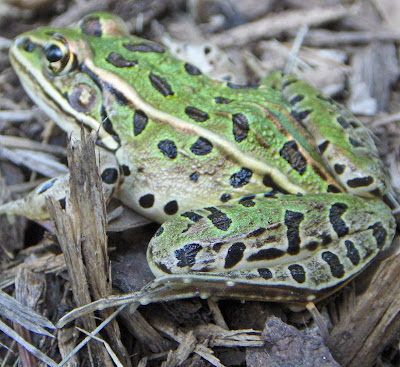
Remember (link) the praying mantis egg cases I set out in the spring? One of my babies showed up today while I was trimming a lavender...
I heard a little voice crying "mommy!" (not really). Anyway, remember, if you click on a photo you can get a bigger version of it.

And here is another critter I saw in some mulch under a spruce tree yesterday...
Blog-housekeeping notes:
This is cool! Right after I embedded my little HGTV (Herb Garden Television -Haha!)gadget into my template so my videos will always be on the main page (see WAY below), Blogger has decided to make uploading videos straight from my computer available. Great minds (eh?) thinking alike, right? Now I wish I could figure out how to add Powerpoint presentations to the blog, because I have a couple good'uns.
I've Googled advice on how to do it, but it is either too time consuming or expensive, depending on the method. If anyone sees a blog with a powerpoint on it, let me know?
I added some newspaper articles about the Detroit Urban Farm and Garden Tour here. These articles take up a lot of space, but the information is important, and some other website/blogs have linked to it, so I thought interested readers deserved to know more.
I heard a little voice crying "mommy!" (not really). Anyway, remember, if you click on a photo you can get a bigger version of it.

And here is another critter I saw in some mulch under a spruce tree yesterday...

Blog-housekeeping notes:
This is cool! Right after I embedded my little HGTV (Herb Garden Television -Haha!)gadget into my template so my videos will always be on the main page (see WAY below), Blogger has decided to make uploading videos straight from my computer available. Great minds (eh?) thinking alike, right? Now I wish I could figure out how to add Powerpoint presentations to the blog, because I have a couple good'uns.
I've Googled advice on how to do it, but it is either too time consuming or expensive, depending on the method. If anyone sees a blog with a powerpoint on it, let me know?
I added some newspaper articles about the Detroit Urban Farm and Garden Tour here. These articles take up a lot of space, but the information is important, and some other website/blogs have linked to it, so I thought interested readers deserved to know more.
Tuesday, August 21, 2007
Homegrown tomatoes for breakfast

Nothing better.
Decent white bread, a little mayonaise, and a couple slices of a Brandywine tomato two minutes from the vine.

MMMM!!!

Makes me want to keep this picture for a screen saver...
And to accompany your meal, here are some folks singing about it
at the Northwest Folklife Fest 2006,
Jay Mary performing Home Grown Tomatoes:
UPDATE: if my link doesn't work on your system, the video easy to find here:
http://www.youtube.com/v/U1BBl-d0Gb4
The song that says it all, written by Guy Clark (link here)
Ain't nothin' in the world that I like better
Than bacon & lettuce & homegrown tomatoes
Up in the mornin' out in the garden
Get you a ripe one don't get a hard one
Plant `em in the spring eat `em in the summer
All winter with out `em's a culinary bummer
I forget all about the sweatin' & diggin'
Everytime I go out & pick me a big one
Homegrown tomatoes homegrown tomatoes
What'd life be without homegrown tomatoes
Only two things that money can't buy
That's true love & homegrown tomatoes
You can go out to eat & that's for sure
But it's nothin' a homegrown tomato won't cure
Put `em in a salad, put `em in a stew
You can make your very own tomato juice
Eat `em with egss, eat `em with gravy
Eat `em with beans, pinto or navy
Put `em on the site put `em in the middle
Put a homegrown tomato on a hotcake griddle
If I's to change this life I lead
I'd be Johnny Tomato Seed
`Cause I know what this country needs
Homegrown tomatoes in every yard you see
When I die don't bury me
In a box in a cemetary
Out in the garden would be much better
I could be pushin' up homegrown tomatoes
Subscribe to:
Posts (Atom)